Portfolio Diversification Shapes Bonus Layering Trends Across Emerging Casino Tech Firms
Written by Bianca Schmitz · Oct 7, 2026
Portfolio Diversification Shapes Bonus Layering Trends Across Emerging Casino Tech Firms
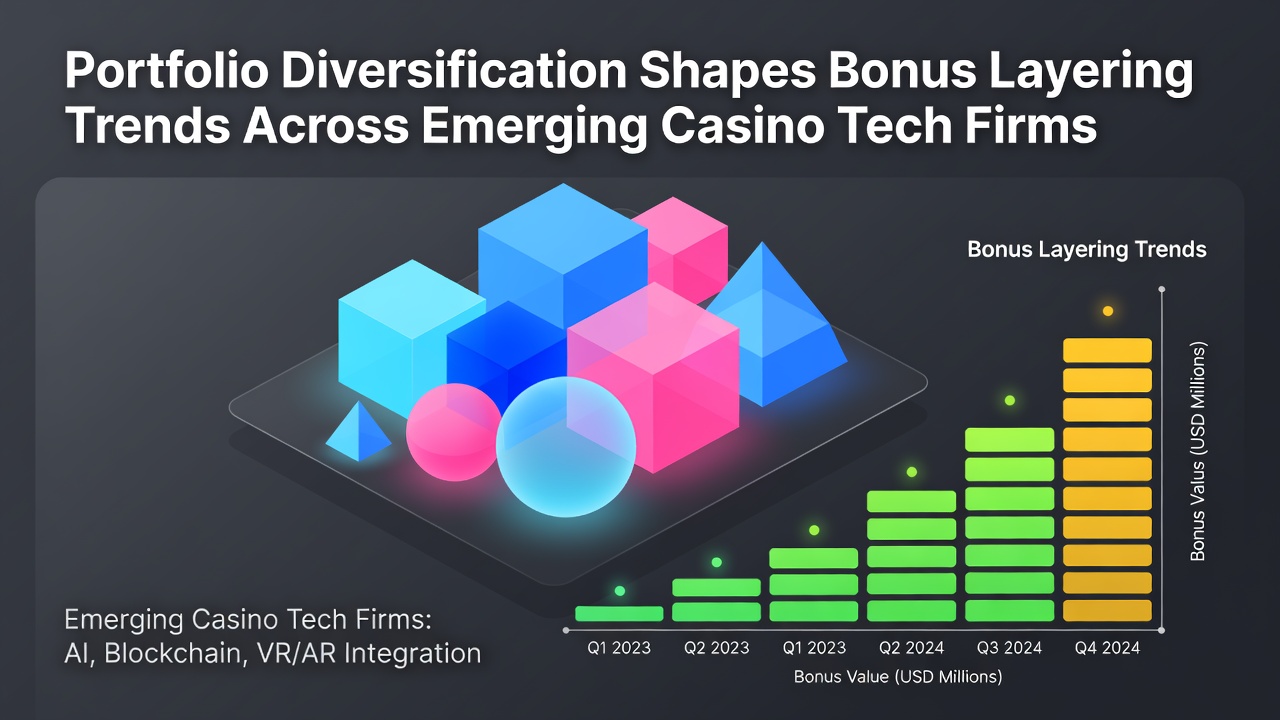
Emerging casino tech firms have expanded their game offerings beyond traditional slots into table games, live dealer formats, and hybrid mechanics, and this shift has directly influenced how bonus layers get structured across product lines. Data from multiple markets shows that companies maintaining at least four distinct game categories report higher integration rates for layered bonus features compared with single-focus developers. Observers note that portfolio breadth allows developers to test trigger conditions in one vertical and apply successful patterns to others without rebuilding entire systems from scratch.
Expansion Patterns in Game Categories
Firms that once concentrated resources on video slots have added crash games, instant-win titles, and virtual sports during the past two years. This move creates shared backend infrastructure where bonus meters can accumulate across game types rather than remaining isolated. A report released in October 2026 by the Nevada Gaming Control Board documented a 27 percent increase in multi-game bonus pools among operators using software from newer suppliers. Those pools draw contributions from slots, blackjack variants, and roulette side bets simultaneously, producing prize values that adjust in real time based on overall activity.
Researchers at several academic institutions tracking software adoption found that diversification correlates with more frequent use of conditional bonus tiers. One tier might unlock after a player completes a set number of spins in a slot title, while a second tier activates only when the same account reaches a volume threshold in a live dealer room. The connection between categories reduces the need for separate promotional calendars and lets operators maintain engagement across an entire session.
Technical Implementation of Layered Bonuses
Bonus layering refers to the stacking of multiple reward mechanics within a single game or across a portfolio, and emerging developers have refined the process through modular code libraries. Instead of hard-coding each bonus into individual titles, companies now deploy shared APIs that pull player data from any game in the catalog. This approach lets a progressive jackpot seeded in one slot contribute to a separate multiplier available in a table game, and the reverse flow occurs without manual reconciliation.

Engineers at these firms describe the architecture as a central ledger that records every qualifying action regardless of game type. When a player switches from a slot to a virtual sports bet, the ledger updates the bonus counter without resetting progress. Industry analysts tracking deployment timelines report that firms adopting this ledger model cut development cycles for new bonus campaigns by roughly 35 percent compared with previous methods that required game-by-game adjustments.
Market Data and Regional Variations
Statistics compiled by the Australian Institute of Criminology for the 2025-2026 fiscal year indicate that operators in regulated markets using diversified portfolios experienced steadier bonus redemption rates month over month. The study attributes the stability to the ability to rotate bonus emphasis between game categories when one segment shows signs of player fatigue. In contrast, suppliers limited to two categories showed sharper drops in engagement after peak periods.
Canadian provincial regulators have also recorded shifts in how bonus funds distribute across player bases. Provinces that permit online casino products noted that emerging tech firms with broader portfolios allocate a larger share of bonus value to lower-volatility layers, which encourages continued play rather than single large wins. These patterns appear in transaction logs submitted to oversight bodies and reflect deliberate design choices tied to portfolio composition.
Future Adjustments Observed in Late 2026
By October 2026 several emerging suppliers had begun testing cross-portfolio loyalty multipliers that scale according to the number of distinct game types a player has accessed within a 30-day window. Early results shared with trade associations show increased session lengths when the multiplier applies uniformly rather than being restricted to one vertical. Developers continue to refine the algorithms that determine when a new layer activates, using anonymized aggregate data to avoid over-triggering any single mechanic.
Those monitoring the sector point out that regulatory filings from multiple jurisdictions now require disclosure of bonus contribution percentages per game category. The requirement stems from the growing complexity of layered systems and the need for transparent reporting when funds move between titles developed by the same supplier.
Conclusion
Portfolio diversification among emerging casino tech firms has produced measurable changes in how bonus layers are designed, funded, and deployed. Centralized ledgers, shared APIs, and multi-category contribution models now appear as standard features rather than experimental add-ons. Figures from regulatory agencies and research organizations continue to track these developments, providing operators with data points that inform future product road maps across different markets.